
For the younger of us here and for the non-farm type readers of the blog, some reading notes of explanation may be in order. Following the comments below I will provide some explanations from us "old types". Some of the stuff is self explanatory. Candy and Mike feel free to chime in.
The hand pump for water by the kitchen sink or on the back porch, the old catalog saved for the outhouse, the coal bucket by the kitchen stove, the big tub for Saturday night baths, the slop bucket on the back porch, Swimming in the big ditch after threshing all day. Aunt Ju-Ju(Mrs.Linse)Best cook/baker in the valley. lunch in the field at harvest time, chores, first TV 1951-1 channel-,4:00pm/10:00pm
MotorVu.........more later
If we were really lucky cabbage rolls and cinnamon rolls.
Icicles the size of my arm hanging from the roof to the ground in front of the living room windows.
Baby lambs we fed with coke bottles.
Gathering eggs at Aunt Ju-Ju's.
Sis
Teaching those new calves to suck and damn near bit your fingers off- an old mad setting hen, eating wormy apples, Martins "smoke house" homemade sausage(old coal shed. & getting into his homemade wine in the basement. Football on the lawn. Rodeos when the parents were gone.
Hauling water for the house cistern
In "the beginning" we didn't have running water. If lucky, the kitchen had a hand pump that pumped water from the cistern. Otherwise the hand pump was located in some other not so convenient place such as the back porch. A cistern was necessary because the farms in the Yellowstone valley could not use the water wells they drilled because the water was "alkaline", i.e. you couldn't drink it. So, the water had to be hauled from town and placed in cisterns. Californians really don't know the meaning of conserving water. Back then if you used too much water in your parent's view, they kicked your hind end. I'm not sure when all the plumbing, electricity etc came together. But I do remember Aunt Julia and Uncle Martin finally getting an indoor bathroom. It was really a big deal even though we still had to conserve water.
If we were really lucky cabbage rolls and cinnamon rolls.
Icicles the size of my arm hanging from the roof to the ground in front of the living room windows.
Baby lambs we fed with coke bottles.
Gathering eggs at Aunt Ju-Ju's.
Sis
Teaching those new calves to suck and damn near bit your fingers off- an old mad setting hen, eating wormy apples, Martins "smoke house" homemade sausage(old coal shed. & getting into his homemade wine in the basement. Football on the lawn. Rodeos when the parents were gone.
Hauling water for the house cistern
In "the beginning" we didn't have running water. If lucky, the kitchen had a hand pump that pumped water from the cistern. Otherwise the hand pump was located in some other not so convenient place such as the back porch. A cistern was necessary because the farms in the Yellowstone valley could not use the water wells they drilled because the water was "alkaline", i.e. you couldn't drink it. So, the water had to be hauled from town and placed in cisterns. Californians really don't know the meaning of conserving water. Back then if you used too much water in your parent's view, they kicked your hind end. I'm not sure when all the plumbing, electricity etc came together. But I do remember Aunt Julia and Uncle Martin finally getting an indoor bathroom. It was really a big deal even though we still had to conserve water.
Aunt Julia was known to all as Aunt JuJu. Little kids had a hard time pronouncing Julia. They could get the Ju out but the rest just didn't seem to follow. So JuJu it became to one and all. She was the older daughter of John and Helena Kinsfather. Grandma Helena had to spend long periods of time in the mental institution in Warm Springs for severe depression (something that probably would be treatable in this day and age). The house keeping chores thus fell to the older female child, Aunt Julia. Not only did she end up being the "responsible one" she ended up being the best cook "in the valley" at least in our view. She was of the tasty and large volume school of the culinary arts! Threshing crew dinners were "a thing to behold!" I'm sure some of the threshing crew members would have worked for the dinners alone.
Slop buckets were present on all farms ~ the original green waste idea. All eatable by-products of the kitchen were thrown into the slop bucket. The slop bucket would then be lugged out to the pig pen and fed to the pigs (or chickens). Those pigs could eat anything, bones, fat, orange peels, lemon peels, coffee grounds, you name it. Recycle was not a concept. It was a fact. At the dairy, my mom had what turned out to be a pet hog. She named her Sally ~ Sally the hog. Most hogs are marketed at about 200 pounds. Sally weighted well over 400 pounds before Mom finally gave approval for her to be slaughtered. Mom actually cried when they hauled Sally away. To the day she died, I think mom felt she betrayed Sally. Not so sure I didn't feel the same way.
To get calves to drink milk from a bucket you had to place your hand in the milk in the bucket and let the calf suck on your fingers until they got the idea that they could drink the milk on their own. Some times the suck became a bite. Hurt like Hell. Sometimes the suction got so high you thought your hand plus arm was going to go down their throat. Sometimes it was hard just to "break" the vacuum from the suction!
Our touch football games in Aunt JuJu's front year were legendary. Young and old played. Time was spent choosing up sides trying to balance the young-old factor and the ability factor, but not much time. The greatest skill possessed by all of the players was the ability to avoid stepping in the chicken shit left by Aunt JuJu's flock of free roaming chickens. Sometimes that was next to impossible when avoiding a "touch" at a full run. The worst of all situations was when in the later part of the game the touch game became a tackle game and you were tackled in a big glob of chicken shit. It still runs shivers up and down my spine. We didn't always have a change of clothes! This is where Mike and I learned the broken field running skills that we used later in organized football at the high school and college level. Mike must have been a better chicken shit runner because he was better at football than me! He also could throw rocks better than me!!
In our early youth, house insulation was pretty much non-existent. Hence, our house at the dairy had "no" insulation in the attic. The heat from what heating sources we had, (basically a fireplace, a wood burning cook stove, and an old oil burner), would go up and out the roof. This created huge ice dams and huge icicles ~ icicles that reached the ground and even crept along the ground. I remember the winters as being pretty bad. But, I don't think we ever gave it a second thought. That was just the way it was.
Our privite swimming pool when we were young was "the big ditch" or the BL&I ditch. The ditches were rather large, i.e. probably 10 to 20 yards wide. I learned how to swim in "moving water" when my cousins Roy and Bob threw me off of the bridge into the ditch. They yelled, "just paddle, the current will carry you to shore." By golly, they were right. I made it. My heart was in my throat but I learned quickly how to "swim". The ditch was not always the cleanest of places to swim. I remember one time when a dead sheep floated by. We just calmly got out and let it go by before we dove back in. I also remember how cool the water was after a long, hot, and work filled day in the field.
Gordon, et. al.


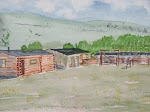
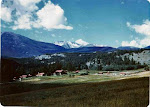
Now that I think of it, the ditches were probably 10 to 20 feet wide not yards! When you are young and trying to swim across one they seem bigger. :-)
ReplyDeleteskip